
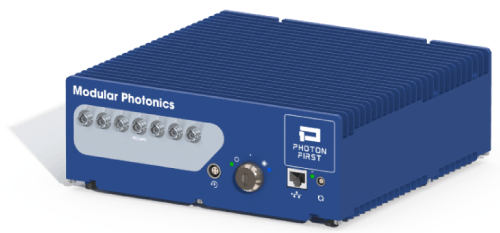
Today’s engineering and scientific challenges demand sensing systems that deliver more than basic measurements. A Fiber Bragg Grating Interrogator is a gateway between the physical changes in a structure and accurate measurements that are far beyond the capabilities of traditional electrical sensors.
A fiber optic interrogator illuminates a web of optical sensors in a strand of fiber. It then interprets the slightest changes in wavelengths of reflected light to provide strain and temperature measurements with an extreme degree of accuracy.
How Interrogation Technology Works
The Role of Fiber Bragg Gratings
Fiber Bragg gratings are tiny structures written into the core of an optical fiber that reflect specific wavelengths of light while allowing all others to pass through. In case of stretching, heating, or compression of the fiber, the reflected wavelength varies predictably. These changes can be detected by the interrogator and converted into accurate measurements of physical parameters.
From Optical Signal to Real‑World Data
The interrogator injects a wide range of light into the fiber. The FBGs reflect only a small range of that light back to the interrogator to be detected by ultra-sensitive optics and electronics. These small changes are converted into actionable data that can be tracked in real time.
Key Advantages of Interrogator Systems
High Precision Across Many Points
These systems can measure hundreds or thousands of sensing points along a single fiber with extremely high spatial resolution, which is well-suited to sensing finer changes in strain and temperature over time.
Immunity to Electromagnetic Interference
Sensing data is transmitted by light rather than electrical signals, so electrical noise or radio frequency fields do not have any impact on performance. This renders optical interrogators ideal in settings that have heavy machinery or high-voltage systems.
Rugged and Durable in Harsh Conditions
Optical fibers can be deployed in the oil and gas sectors as well as the aerospace and power generation sectors, where other types of sensors might not perform dependably.
Real‑World Applications Driving Innovation
Structural Health Monitoring
Stress and strain develop over time in bridges, tunnels, and buildings. Fiber optic interrogator systems provide engineers with a real-time perspective of these effects, which helps the engineer to identify problems before they escalate.
Aerospace and Transportation
Real-time strain and temperature data in dynamic structures such as aircraft wings or rail tracks can enhance the safety of the design and improve maintenance strategies.
Energy Sector
Strong monitoring solutions are needed in wind turbines, pipelines, and power plants. Optical interrogators offer stable performance without the use of electrical wiring.
Choosing the Right Interrogation Solution
Selecting an appropriate sensing system depends on several key factors:
-
Wavelength Range & Resolution: Determines how many sensors can be monitored and how finely changes are measured.
-
Sampling Rate: For dynamic environments with motion and vibration, higher rates capture more detail.
-
Environmental Tolerance: Systems must withstand the conditions where they’re deployed.
-
Integration & Data Handling: Seamless connectivity with analytics platforms enhances real‑time decision‑making.
Why Choose Sensuron?
Sensuron is a leader in the development of fiber Bragg grating interrogators and offers instruments with high precision and reliability. Our systems provide high-resolution and real-time data. We are concerned with durability, resistance to interference, and compatibility with the current infrastructure. Our instruments provide precise, practical insights that allow engineers to optimize performance, maximize safety, and minimize maintenance expenses.
Conclusion
The Fiber Bragg Grating Interrogator converts minute variations in light to accurate, actionable measurements that can transform how a structure is designed and monitored. With high precision, durability, and immunity to interference, these systems represent a leap forward in sensing technology that supports smarter infrastructure, safer transportation, and optimized industrial processes in real‑time.